
Best Digital Marketing Strategies for Small Businesses in 2024

In the ever-evolving digital landscape, small businesses must stay ahead of the curve to thrive. As we step into 2024, the importance of effective digital marketing strategies cannot be overstated. Whether you’re a startup or an established small business looking to expand your online presence, these cutting-edge strategies will help you achieve your goals. Here’s a comprehensive guide to the best digital marketing strategies for small businesses in 2024. 1. Leverage Social Media Marketing Social media continues to be a powerful tool for small businesses. Platforms like Facebook, Instagram, Twitter, and LinkedIn offer unparalleled opportunities to connect with your audience. In 2024, focus on creating engaging content that resonates with your target market. Utilize stories, reels, and live videos to enhance engagement. Collaborate with micro-influencers to expand your reach authentically. Key Tips: – Post consistently and at optimal times. – Use analytics tools to track engagement and adjust your strategy accordingly. – Engage with your followers through comments, messages, and polls. 2. Invest in Search Engine Optimization (SEO) SEO remains a cornerstone of digital marketing. With search algorithms becoming more sophisticated, it’s crucial to stay updated with the latest SEO practices. Focus on local SEO to attract customers in your area. Optimize your website for mobile devices, as mobile-first indexing is now standard. Key Tips: – Conduct keyword research to identify relevant terms your audience is searching for. – Create high-quality, informative content that answers your audience’s questions. – Build backlinks from reputable websites to enhance your domain authority. 3. Utilize Email Marketing Email marketing continues to offer one of the highest returns on investment (ROI) among digital marketing channels. Personalize your emails to make them more relevant to your subscribers. Use automation tools to send timely, targeted messages. Key Tips: – Segment your email list based on customer behavior and preferences. – Craft compelling subject lines to improve open rates. – Include clear calls to action to drive conversions. 4. Embrace Video Marketing Video content is increasingly popular and can significantly boost your marketing efforts. Platforms like YouTube, TikTok, and Instagram Reels offer excellent opportunities to showcase your products or services. Create informative, entertaining, and visually appealing videos to capture your audience’s attention. Key Tips: – Keep videos concise and engaging. – Include subtitles for accessibility. – Use storytelling to create a deeper connection with your audience. 5. Implement Content Marketing Content marketing is essential for establishing your authority in the industry. Regularly publish blog posts, articles, and infographics that provide value to your audience. Focus on topics that address common pain points and offer solutions. Key Tips: – Use a content calendar to plan and schedule your posts. – Promote your content across various channels to reach a wider audience. – Encourage user-generated content to build community and trust. 6. Adopt Artificial Intelligence and Automation Artificial Intelligence (AI) and automation tools can streamline your marketing efforts and provide valuable insights. Use AI-driven analytics to understand customer behavior and preferences. Implement chatbots on your website to offer instant support and improve customer experience. Key Tips: – Leverage AI tools to personalize marketing campaigns. – Use automation to save time on repetitive tasks, allowing you to focus on strategic activities. – Monitor AI performance and make adjustments as needed to optimize results. Conclusion In 2024, small businesses must adopt a multifaceted approach to digital marketing to stay competitive. By leveraging social media, investing in SEO, utilizing email marketing, embracing video content, implementing content marketing, and adopting AI and automation, you can create a robust digital presence. Stay adaptable and continuously monitor the performance of your strategies to achieve sustained success in the digital realm. Best digital marketing strategies for small businesses in place, your small business is well-equipped to navigate the digital landscape of 2024 and beyond. Start implementing these tips today and watch your online presence flourish!
5 Ultimate Tips To Optimize Your On-Page SEO
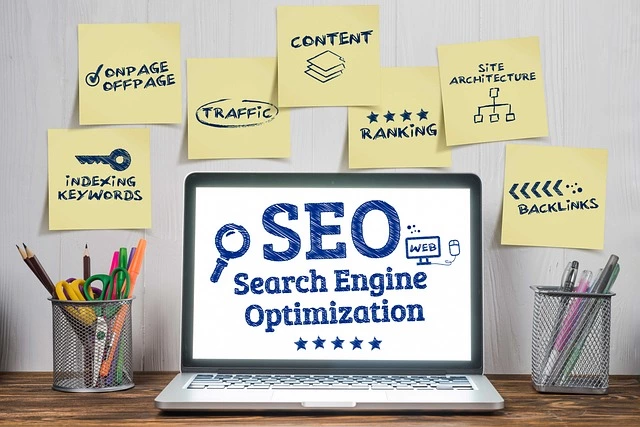
5 Ultimate Tips To Optimize Your On-Page SEO Introduction In the digital age, having a strong online presence is crucial for businesses looking to thrive in the competitive landscape of the internet. One key aspect of improving your visibility online is through optimizing your on-page SEO. By implementing the right strategies, you can boost your website’s rankings on search engine results pages (SERPs) and drive more organic traffic to your site. In this article, we will discuss five effective ways to optimize your on-page SEO and enhance your online visibility. 1. Conduct Keyword Research Utilize keyword research tools Utilize resources such as Ahrefs, SEMrush, and Google Keyword Planner to find low-competition, high-volume relevant keywords. Pay attention to long-tail keywords that are relevant to your target market and niche is essential for optimize your on-page SEO. Incorporate keywords strategically for optimize your on-page SEO Include target keywords in the page title, meta description, headings, and throughout the content. To provide readers value, stay away from cluttering the material with keywords and make sure it flows smoothly. 2. Optimize Meta Tags and Descriptions Craft compelling meta titles Write unique and descriptive meta titles that accurately reflect the content of the page. To make sure your titles show up correctly in search results, keep them under 60 characters. Create engaging meta-descriptions Write persuasive meta descriptions that entice users to click on your link. Include target keywords naturally and provide a summary of the page’s content. 3. Improve User Experience and Website Speed Optimize page load speed Minimize image sizes, enable browser caching, and utilize content delivery networks (CDNs) to improve website speed. Use resources like as Google PageSpeed Insights to pinpoint areas that require enhancement. Enhance mobile responsiveness Ensure that your website is mobile-friendly and displays properly on various devices. Mobile-friendly websites are given priority in search results according to Google’s mobile-first indexing. 4. Create High-Quality and Relevant Content Focus on quality over quantity Produce well-researched, informative, and engaging content that resonates with your target audience. Update and refresh material frequently to ensure it is current and useful. Use multimedia elements To improve the user experience, use films, infographics, pictures, and other multimedia components. Optimize multimedia files for faster loading times and better SEO performance. 5. Build Internal Links and Improve Site Structure Implement internal linking strategies Link to relevant pages within your website to improve navigation and help search engines understand the context of your content. Use descriptive anchor text that includes target keywords for SEO benefits. Optimize site structure Organize your website’s content logically with a clear hierarchy and intuitive navigation. Create XML sitemaps to help search engines crawl and index your pages efficiently. 5 most important on-page SEO factors are: Keyword in title tag: Having your keyword in the title tag is essential for SEO. Keyword in H1 tag: Placing your keyword in an H1 tag is considered important for SEO. Keyword early in content: Including the keyword within the first 100 to 200 characters of a page is crucial for ranking. Keyword repetitions in content: Repeating the main keywords throughout the content is vital for ranking, focusing on synonyms and variations. Keyword in meta description: Including the keyword in the meta description helps highlight it and make the search result more appealing. “Optimizing your on-page SEO is essential for improving your website’s visibility and attracting organic traffic.” By following these five strategies for optimizing on-page SEO, you can enhance your website’s search engine rankings, drive more traffic, and ultimately, improve your online presence. Remember to continuously monitor and adjust your SEO efforts to stay ahead of the competition and achieve long-term success.
Ultimate SEO Tips for Designing a Website Full of search engine optimization
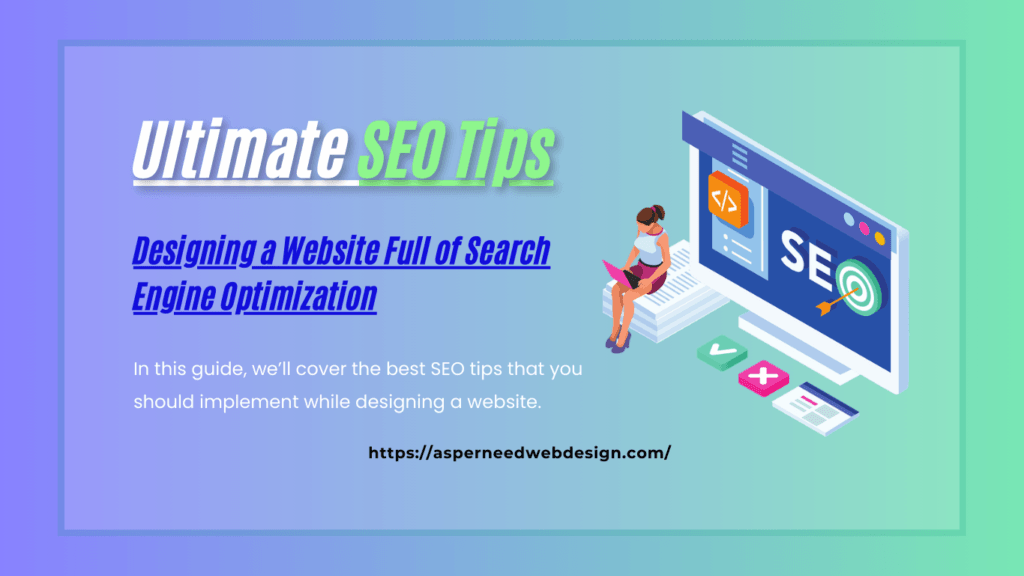
If you’re designing a website, SEO (Search Engine Optimization) should be a top priority. A well-optimized site helps you rank higher on Google, attract more visitors, and grow your business. But how do you design a website that’s fully optimized for search engines? In this guide, we’ll cover the best SEO tips that you should implement while designing a website. 1. Start with a Solid Site Structure A clean and logical site structure makes it easier for both users and search engines to navigate your website. Follow these steps: ✅ Plan a clear hierarchy – Your homepage should link to main categories, and those categories should link to subcategories or individual pages.✅ Use a simple URL structure – Keep URLs short, descriptive, and keyword-friendly. Example: 2. Use an SEO-Friendly Design Your website design affects SEO more than you think! Here’s what you need to do: 🎨 Mobile-first design – Since Google uses mobile-first indexing, ensure your website looks great and functions smoothly on mobile devices.⚡ Fast loading speed – A slow website can hurt rankings. Use optimized images, a caching plugin, and a lightweight theme.🔄 Easy navigation – Use a sticky menu, breadcrumbs, and a clear call-to-action (CTA) to improve user experience. 3. Optimize Your On-Page SEO Elements Every webpage should be optimized with the right elements: 📌 Title Tags & Meta Descriptions 📌 Use Proper Headings (H1, H2, H3) 📌 Image Optimization 4. Focus on High-Quality Content Content is king when it comes to SEO. Follow these content strategies: ✍ Write for humans first, SEO second – Avoid keyword stuffing and write naturally.📊 Use long-tail keywords – These are less competitive and bring in targeted traffic.📌 Add internal links – Link to related content within your site to improve user engagement and help search engines understand your site structure.🎯 Include external links – Link to authoritative sources to add credibility. 5. Technical SEO Matters Too! Technical SEO helps search engines crawl, index, and understand your website properly. 🔍 Enable HTTPS – A secure site (SSL certificate) is a ranking factor.🚀 Fix broken links – Use tools like Google Search Console to find and fix broken links.📱 Optimize Core Web Vitals – Ensure your site loads fast, is responsive, and provides a smooth user experience. 6. Implement Schema Markup for Better Visibility Schema markup helps search engines display rich results like ratings, FAQs, and breadcrumbs. Use Google’s Structured Data Markup Helper to add schema markup for:✅ Blog posts✅ Products✅ FAQs✅ Reviews 7. Improve User Engagement (Important for SEO!) A website with better engagement gets higher rankings because Google sees it as valuable. Here’s how to boost engagement: 🎯 Write compelling headlines – Use numbers, power words, and curiosity to grab attention.🎥 Use visuals & videos – Infographics and explainer videos keep users engaged.📢 Add CTA buttons – Encourage users to take action, such as signing up or reading another post. 8. Optimize for Local SEO (If You Have a Business Website) If you’re targeting a local audience, implement these strategies: 📍 Claim your Google My Business listing and keep it updated.📍 Use local keywords like “best SEO agency in [Your City]”.📍 Get customer reviews to build trust and improve rankings. Final Thoughts SEO-friendly web design is not just about ranking on Google—it’s about creating a great user experience while making your site discoverable. 🚀 By following these SEO tips, your website will:✔ Rank higher on search engines✔ Attract more traffic✔ Convert visitors into customers, Now it’s your turn! Apply these SEO strategies to your website and see the difference. Have any questions? Drop them in the comments! 😊
Enhancing Your Business Website’s SEO
Business Website’s SEO SEO is the strategic process of enhancing a website’s organic traffic by increasing its visibility and relevance in search engine results. It involves a myriad of techniques, ranging from keyword optimization and content creation to technical improvements and link building. Effective SEO not only helps in driving more traffic to your blog but also ensures that the right audience finds it. Enhancing Your Business Website’s SEO In this Article we try to provide a Comprehensive Guide to Optimize Online Visibility and Enhancing Your website’s SEO for better ranking. Business Website’s SEO I. Understanding SEO and its Importance for Business Websites A. Defining SEO: Unveiling the Key Concepts SEO, or Search Engine Optimization, is the practice of optimizing a website to improve its visibility on search engine results pages (SERPs). When a website ranks higher on search engine results, it is more likely to attract organic traffic. This is crucial for businesses as it increases the chances of potential customers discovering their products or services online. Search engines act as the gateway to the internet, with users relying on them to find answers to their queries. By understanding how search engines work and tailoring your website accordingly, you can ensure that your business is visible to users who are actively searching for what you offer. B. The Significance of SEO for Business Websites A well-optimized website offers numerous benefits for businesses. First and foremost, it increases online visibility, making it easier for potential customers to find your website. By appearing on the first page of search results, you stand a higher chance of generating click-throughs and conversions. SEO also plays a crucial role in enhancing the user experience on your website. Optimizing page load speed, improving navigation, and ensuring mobile responsiveness all contribute to a seamless browsing experience for your visitors. This, in turn, leads to increased user satisfaction and a higher likelihood of them staying longer on your website and engaging with your content. Additionally, SEO helps build credibility and trust with your audience. When your website consistently appears on the first page of search results, users perceive it as being well-established and reliable. This can have a positive impact on their perception of your brand and increase the likelihood of them choosing your products or services over competitors. C. Debunking Common SEO Misconceptions There are several misconceptions surrounding SEO that need to be debunked. One common myth is that SEO is a one-time effort that guarantees instant results. However, SEO is an ongoing process that requires continuous monitoring, analysis, and optimization to stay ahead of the competition and adapt to changes in search engine algorithms. Another misconception is that stuffing your website with keywords will automatically boost your rankings. While keywords are important for SEO, over-optimization can lead to penalties from search engines. It is crucial to strike a balance and ensure that your content caters to both search engines and human readers. It’s also important to note that SEO is not just about manipulating search engine rankings. It encompasses a range of strategies aimed at enhancing the user experience, improving website performance, and delivering valuable content. SEO should always keep the user in mind and prioritize their needs and preferences. II. Conducting Effective Keyword Research for Targeted Optimization A. Nailing the Basics of Keyword Research Keyword research is a critical step in SEO as it helps you understand what your target audience is searching for and the language they are using. By identifying the keywords and phrases they commonly use, you can tailor your website content to align with their search behavior. Start by gaining a deep understanding of your target audience’s demographics, preferences, and pain points. This will provide valuable insights into the keywords they are likely to use when searching for products or services related to your business. Once you have identified your target audience, conduct keyword research using tools like Google Keyword Planner, Ahrefs, or SEMrush. These tools provide valuable data on search volume, keyword difficulty, and related keywords. Focus on long-tail keywords, which are more specific and have lower competition. These keywords often lead to higher conversion rates as they reflect the user’s intent with greater accuracy. B. Employing Tools for In-depth Keyword Analysis Keyword research tools offer a wealth of data and insights that can help you optimize your website for targeted keywords. Google Keyword Planner is a free tool that provides search volume data and keyword suggestions based on your business or website. It can also help you identify long-tail keywords that may have lower competition but higher relevance to your audience. Ahrefs and SEMrush are paid tools that offer comprehensive keyword research functionalities. These tools not only provide search volume data but also analyze keyword difficulty and competition. They allow you to discover new keyword ideas, identify the top-ranking websites for specific keywords, and track your website’s performance for selected keywords over time. When analyzing keyword difficulty, pay attention to the competitiveness of the keywords you choose. High competition keywords may be harder to rank for, especially for new or smaller websites. Balancing high-competition keywords with lower competition ones can help improve your website’s chances of ranking higher on SERPs. C. Optimizing Website Content with Targeted Keywords Once you have identified your target keywords, it’s essential to integrate them organically within various elements of your website. These elements include headings, titles, meta descriptions, URLs, and the body text of your webpages. When incorporating keywords, ensure that they flow naturally within your content and do not disrupt the readability or user experience. Keyword stuffing is not only frowned upon by search engines but also discourages users from engaging with your content. Aim for a natural and seamless integration of keywords. Long-tail keywords play a crucial role in SEO and can have a significant impact on your website’s ranking. These keywords are more specific and reflect a user’s intent more accurately. By targeting long-tail keywords, you can attract highly relevant traffic to your website, improving your chances of conversions. Include long-tail
Get ready for the next era of business

You’ve got your announcement in mind, and now it’s time to get it down in words to share with you… So without wasting any more time, let’s get on to it. First up: Let’s look at some of the most crucial aspects or features that are required in every travel company website. Enabling Online Travel Booking and Reservations Before you can win over any visitor or potential customer, you must make a great first impression as a company. Your story about WHY and HOW your company came into existence is one of the most important things you can communicate to your audience. If your visitors like you as a company, they are more likely to purchase services from you. So, your company’s story is crucial to be communicated in the right way and in the most beautiful manner possible. The needs of a small-time tour operator are a lot different from the needs of a large international travel agency itself. Steve Doe – Partner Eventually, you must also offer them attractive and competitive tour packages. You must be able to clearly communicate to your customers what your services are, how they are different from others compelling manner. Of course, you would want your visitors to conveniently reach out to you and contact you. You would want to display all the crucial information about your company, including a map that would show your visitors where exactly they will find you. Displaying Company Information Here are the major fear of rejection symptoms identified by psychologists: It’s all the better if you can accept payments online so that you can close the sales then and there. It is much easier and convenient for your customers as well, and you too increase your chance of generating leads. To make sure that your travel company website is compatible with some kind of online payment mechanism. These will be crucial and highly beneficial for you later in the process. H1: Reject the Fulfilling Prophecy This is my average total monthly spending from one year living in Seattle’s Capitol Hill, one year living in San Francisco’s Upper Haight, one year traveling to 20 countries, and one month at a hotel in Bali. It is much cheaper for me to travel. Since the majority of my costs are from trains and flights, it’s significantly cheaper if I stay in one place. H2:Focus On How You Want to Be This is my average total monthly spending from one year living in Seattle’s Capitol Hill, one year living in San Francisco’s Upper Haight, one year traveling to 20 countries, and one month at a hotel in Bali. It is much cheaper for me to travel. Since the majority of my costs are from trains and flights. H3: Construct a Narrative Instead of working during the daylight hours and pushing all my free time to the worst part of the day, I prefer to enjoy the days and work at night. I get out of bed faster when I’m excited to go out, and when I don’t have to commute there’s just more time in the day. I like to work 7 days a week with flexible hours so I can take a day off when I please or enjoy an empty movie theater at 2pm. H4: Tap Into Your Imagination I now have friends all over the world whose life experiences are very different than mine and bring fresh perspectives to my ideas. I’m learning about the real problems that affect the world on a global scale, which will make me. H5: Embrace Not Knowing There’s a growing community of “digital nomads” who live a location independent lifestyle. We’re software developers, designers, writers, journalists, engineers, and all sorts of people who share a passion for the work we do. H6: Remember You Will Survive Three years ago I was preparing to leave my job at Microsoft to move to San Francisco to start a startup. My friend asked me “but why do you need to be in San Francisco when you can work on a computer from anywhere?” His question made a lot of sense. As I thought about it more, I began to question my assumptions about a “normal life” which don’t make sense in our modern world. H1: Heading 1 H2: Heading 2 H3: Heading 3 H4: Heading 4 H5: Heading 5 H6: Heading 6 Three years ago I was preparing to leave my job at Microsoft to move to San Francisco to start a startup. My friend asked me “but why do you need to be in San Francisco when you can work on a computer from anywhere?” His question made a lot of sense. As I thought about it more, I began to question my assumptions about a “normal life” which don’t make sense in our modern world. Displaying Company Information Here are the major fear of rejection symptoms identified by psychologists: It’s all the better if you can accept payments online so that you can close the sales then and there. It is much easier and convenient for your customers as well, and you too increase your chance of generating leads. To make sure that your travel company website is compatible with some kind of online payment mechanism. These will be crucial and highly beneficial for you later in the process. Three years ago I was preparing to leave my job at Microsoft to move to San Francisco to start a startup. My friend asked me “but why do you need to be in San Francisco when you can work on a computer from anywhere?” His question made a lot of sense. As I thought about it more, I began to question my assumptions about a “normal life” which don’t make sense in our modern world. Name Position Office Erica Romaguera Coach Audi Caleigh Jerde Lawyer Pizza Hut Lucas Schultz Librarian Burberry Carole Marvin Educator Starbucks Woodrow Nikolaus Massage Therapist Jack Daniel’s